How to Study in Russia: University Guide for 2025
September 14, 2026
You’ve probably seen the tuition numbers from UK or US medical schools and wondered if there’s a realistic alternative. There is. If you want to study in Russia university programs that cost a fraction of what you’d pay in the West, without needing a near-perfect IELTS score, this guide walks you through exactly how it works in 2025.
Most students researching this path have the same questions: which universities actually accept international students, do you need English test scores, how long does the visa process take, and is the degree even recognized back home. The short answers are yes to English-taught programs, often no to IELTS/TOEFL, and a timeline that can move in weeks rather than months if you pick the right university and agency to guide you.
This article covers the full process, from shortlisting universities across cities like Moscow, Kazan, and Ufa to understanding real tuition and living costs, checking WHO and NMC recognition status for medical degrees, and handling admission, invitation, and visa steps in order. By the end, you’ll know exactly what studying in Russia looks like for Indian students and other international applicants planning to start in 2025.
Why study in Russia as an international student?
Ask any student who’s compared brochures side by side and you’ll get the same answer: why study in Russia comes down to cost, access, and speed, the same picture our complete guide to studying in Russia for international students lays out in detail. A six-year MBBS-equivalent program in Russia runs roughly $30,000 to $45,000 total, tuition and hostel included, against $250,000 or more for a comparable degree in the US or UK. That gap alone explains why thousands of Indian and international families now treat Russia as a serious option rather than a backup plan, though it is worth weighing the downsides of studying MBBS in Russia before you commit.
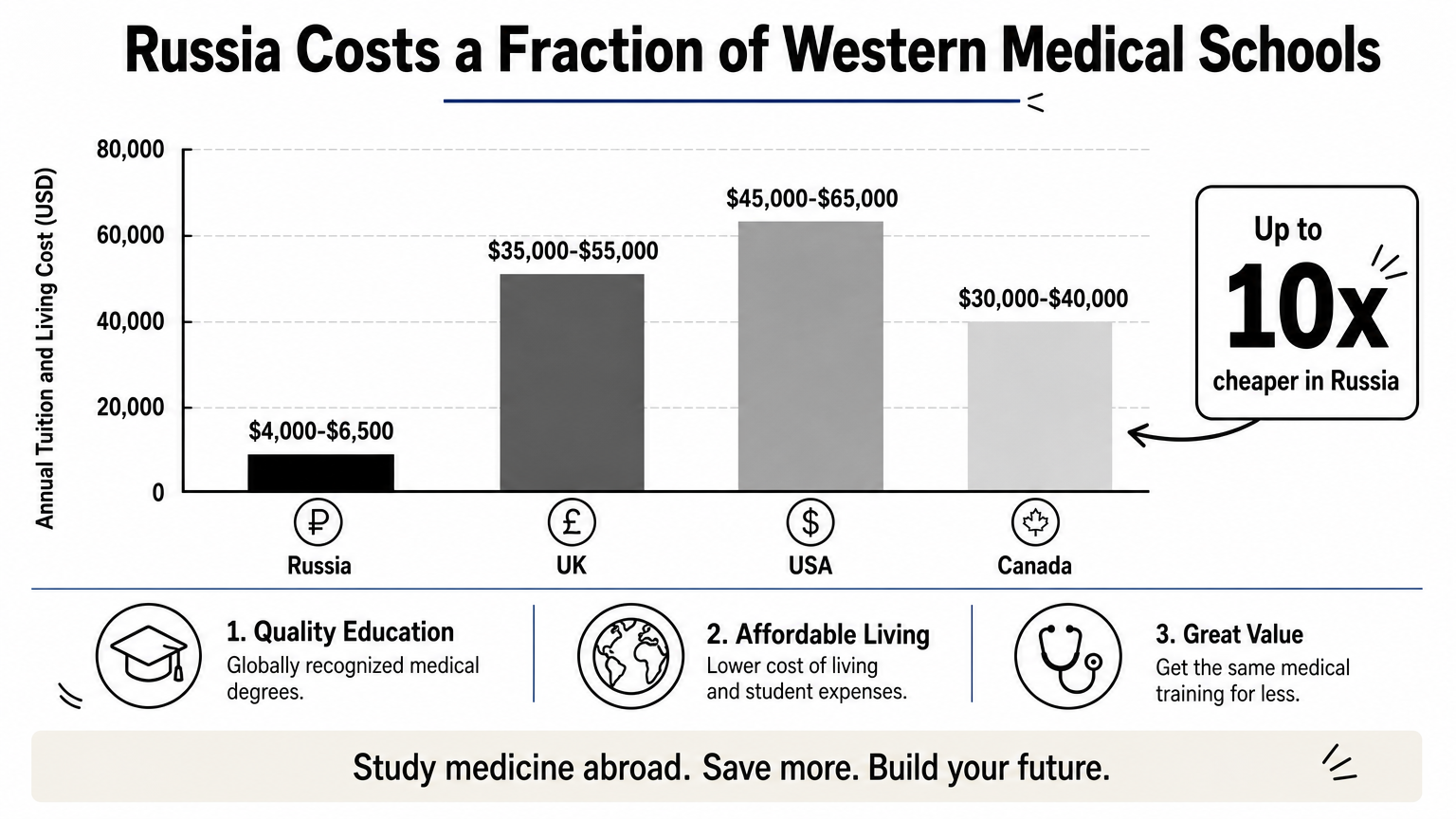
The real cost comparison
Numbers convince faster than promises, so look at annual averages before you decide anything.
| Destination | Avg. Annual Tuition (Medicine) | Avg. Annual Living Cost |
|---|---|---|
| Russia | $4,000–$6,500 | $1,800–$3,000 |
| UK | $35,000–$55,000 | $12,000–$15,000 |
| USA | $45,000–$65,000 | $15,000–$18,000 |
| Canada | $30,000–$40,000 | $10,000–$13,000 |
Studying medicine in Russia can cost less over six years than a single year of medical school in the US or UK.
No English test, no lost year
Most English-taught programmes in Russia skip the IELTS or TOEFL requirement entirely, so a weak test score won’t derail your timeline. This matters most for students who study in Russia for international students’ programs straight after finishing school, without a gap year spent retaking exams.
Recognized degrees, real licensing paths
Degrees from WHO-listed and NMC-recognized universities let graduates sit licensing exams like India’s FMGE or NEXT after returning home. Before shortlisting anything, confirm the university’s current listing on the WHO World Directory of Medical Schools, since recognition status can change and directly affects whether you can practice later.
Step 1. Choose your university and course
Before you fill out a single form, decide what you’re actually optimizing for: cost, city, or recognition status. Study in Russia for Indian students planning MBBS-equivalent programs should start by shortlisting only top Russian medical universities listed on the WHO World Directory, since that filter alone eliminates half the noise you’ll find online.
Match your budget and city
Cities like Ufa and Kazan run 20-30% cheaper than Moscow or Saint Petersburg for the same degree, so decide early whether you want the capital experience or a lower cost of living. RUSBASE’s university comparison tool lists tuition and housing side by side across 24+ partner institutions, so you’re not guessing.
Pick the city budget first, then let it narrow your university list, not the other way around.
Confirm the course actually fits your goals
Check the program length, the language of instruction, and whether internships or clinical rotations happen in English. This single step decides how to study in Russia without wasting a year discovering the course doesn’t match your licensing plans back home.
Step 2. Check your eligibility and required documents
Most universities ask for the same basic proof: a completed secondary school certificate with at least 50% in Physics, Chemistry, and Biology for medical programs, a valid passport, and a clean police clearance. Eligibility rules rarely include an age cutoff below 17, so students applying straight after 12th grade rarely hit a wall here.
Build your document folder early
Getting paperwork translated and notarized takes longer than students expect, so work through the checklist of documents for a Russian university the same week you shortlist one.
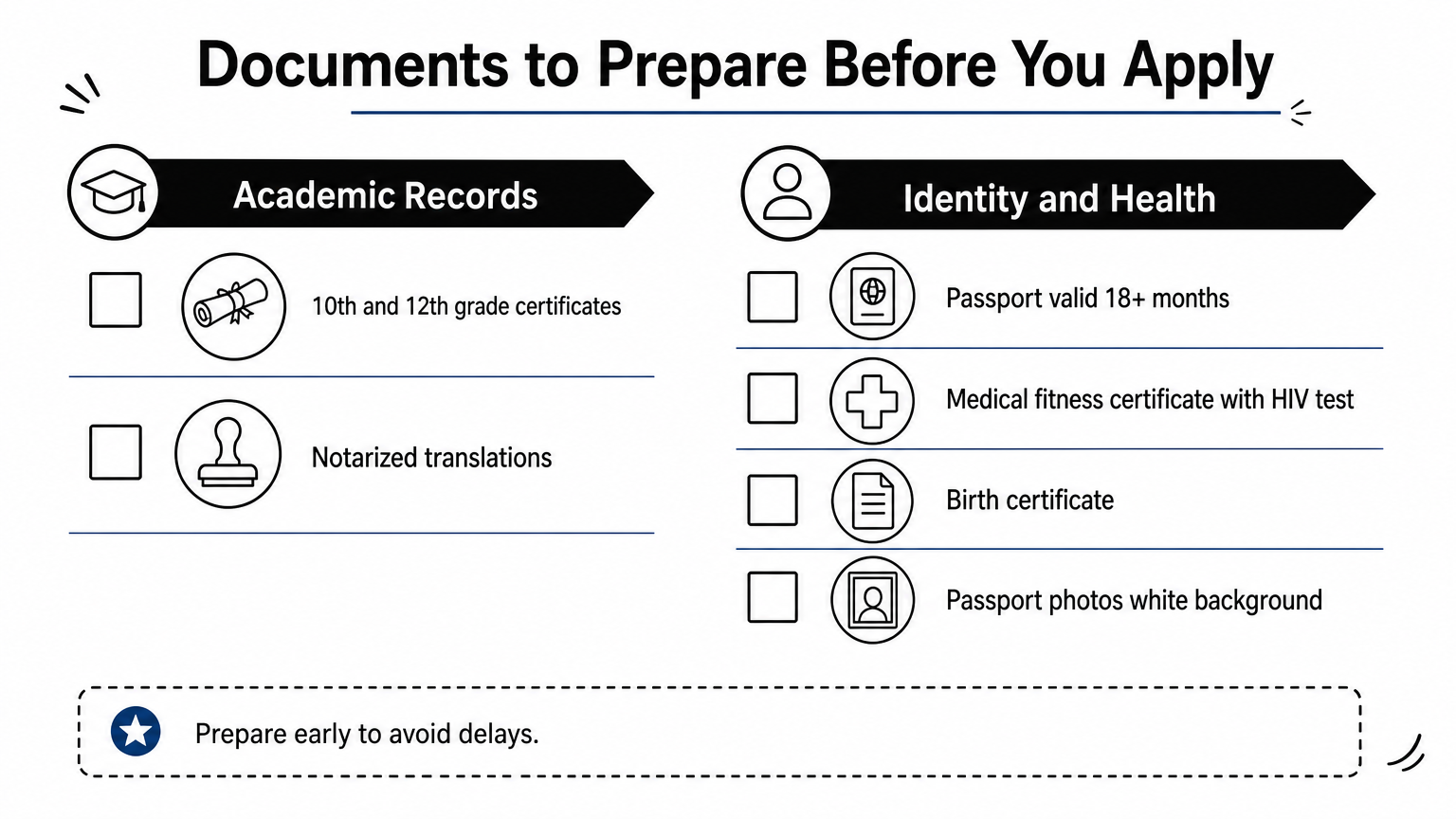
- 10th and 12th grade mark sheets and certificates
- Passport valid for at least 18 months
- Passport-sized photographs (white background)
- Medical fitness certificate, including an HIV test
- Birth certificate
- Notarized translations of all academic documents
Missing one notarized translation can delay your invitation letter by weeks, so check every document twice before submitting.
Get documents checked before you submit
RUSBASE reviews every applicant’s paperwork before it goes to the university, catching missing translations or formatting errors that would otherwise bounce an application back. This single check is why the process for study in Russia 2025 applicants moves faster than students expect, especially those handling admissions without any agency support.
Step 3. Apply and submit your application
Once your documents are ready, submission itself moves fast if you’ve done Step 2 properly. Application submission for most partner universities happens online through the agency, with your file forwarded directly to the admissions office rather than sitting in a queue.

What happens after you submit
Here’s the typical sequence once your application lands with the university:
- University reviews your marksheets and passport copy
- Admission decision issued, usually within 7 working days
- Official invitation letter processed, typically 30 working days
- Invitation sent to you for the visa application
A 7-day admission turnaround only happens when your paperwork is complete on the first try.
Why the invitation letter matters
Embassies won’t process a student visa without this official invitation, so treat it as the single document that unlocks everything after it, and read who issues the invitation letter and how long it takes before you plan your dates. Delays here almost always trace back to incomplete files from Step 2, not the university dragging its feet.
Confirm your seat
Securing the seat usually means paying an initial tuition installment once the invitation arrives, confirmed directly with the university’s finance office. RUSBASE tracks this stage for every applicant, so you’re not left guessing whether your payment or paperwork actually reached the right desk in Russia.
Step 4. Secure your visa and travel to Russia
Once your invitation letter arrives, the embassy visa process moves fast, usually within a week if your documents match the invitation exactly. Student visa applications require the original invitation, a filled application form, passport photos, and proof of tuition payment, so keep digital and printed copies of everything before your embassy appointment.
Book your embassy slot early
Slots at Russian consulates fill up during peak intake months, so book your appointment the day your invitation lands rather than waiting.
- Original invitation letter and passport
- Visa application form and photos
- Proof of tuition payment
- Medical insurance confirmation
Your visa only moves as fast as your invitation letter, so chase that document first.
Arrival and settling in
Travel is booked once your visa stamp is confirmed, and RUSBASE’s on-the-ground adviser arranges airport pickup so you’re not navigating an unfamiliar city alone on day one. Housing, local registration, and orientation happen in your first week, giving you a working routine before classes start.
Your path to studying in Russia
Getting into a Russian medical university isn’t complicated once you know the sequence: shortlist by budget and WHO recognition, gather your documents early, submit a clean application, then move fast once the invitation letter lands. Every delay students run into traces back to one of these four steps, not bad luck or bureaucracy.
Speed matters here. Students who study in Russia after 12th grade with organized paperwork routinely finish admission to visa stamp in under two months, while those winging it alone often lose that same time to avoidable document errors. The difference isn’t luck, it’s having someone check your file before the university does.
That’s the entire value of working with an agency instead of going solo. If you’re ready to shortlist universities, confirm real costs, and get your documents reviewed before submission, tell us your subject and budget and get your 2025 intake moving this week.
Questions About Your Own Case?
Requirements depend on your nationality and subject. Ask us directly — free.
Book a Free Consultation