
How to Study in Russia for Kuwaiti Students: A Step-by-Step Guide
September 22, 2026
If you’re a student in Kuwait looking at tuition bills for medicine or engineering in the UK, US, or even private universities back home, you already know the math doesn’t work for most families. Study in Russia for Kuwaiti students has become a real alternative, with WHO and recognized degree programs that cost a fraction of what you’d pay elsewhere, taught entirely in English, and without demanding an IELTS or TOEFL score before you apply.
This guide answers the practical question Kuwaiti families actually ask: what does the process look like from your living room in Kuwait City to your first day on campus in Moscow or Kazan? We walk through visa requirements, the documents Russian embassies expect from Kuwaiti passport holders, and how university admissions actually get processed once you submit an application.
You’ll get a step-by-step breakdown covering university selection based on budget and specialty, document preparation and translation, the invitation letter timeline, embassy visa procedures, and what to expect on arrival. We’ve built this around the same process our advisers use daily with students from the Gulf, so nothing here is theoretical.
Why Kuwaiti students choose Russia for higher education
Kuwait sends thousands of students abroad every year, and medicine remains the top request families bring to us. Studying medicine in Russia costs a fraction of what the same WHO-recognized degree costs in London or Toronto, and that gap only widens once you factor in living expenses. Most Kuwaiti families we work with have already priced out the UK or Canada and come to us specifically because the numbers there don’t add up for a five or six-year program.
Tuition costs stack up in Russia’s favor
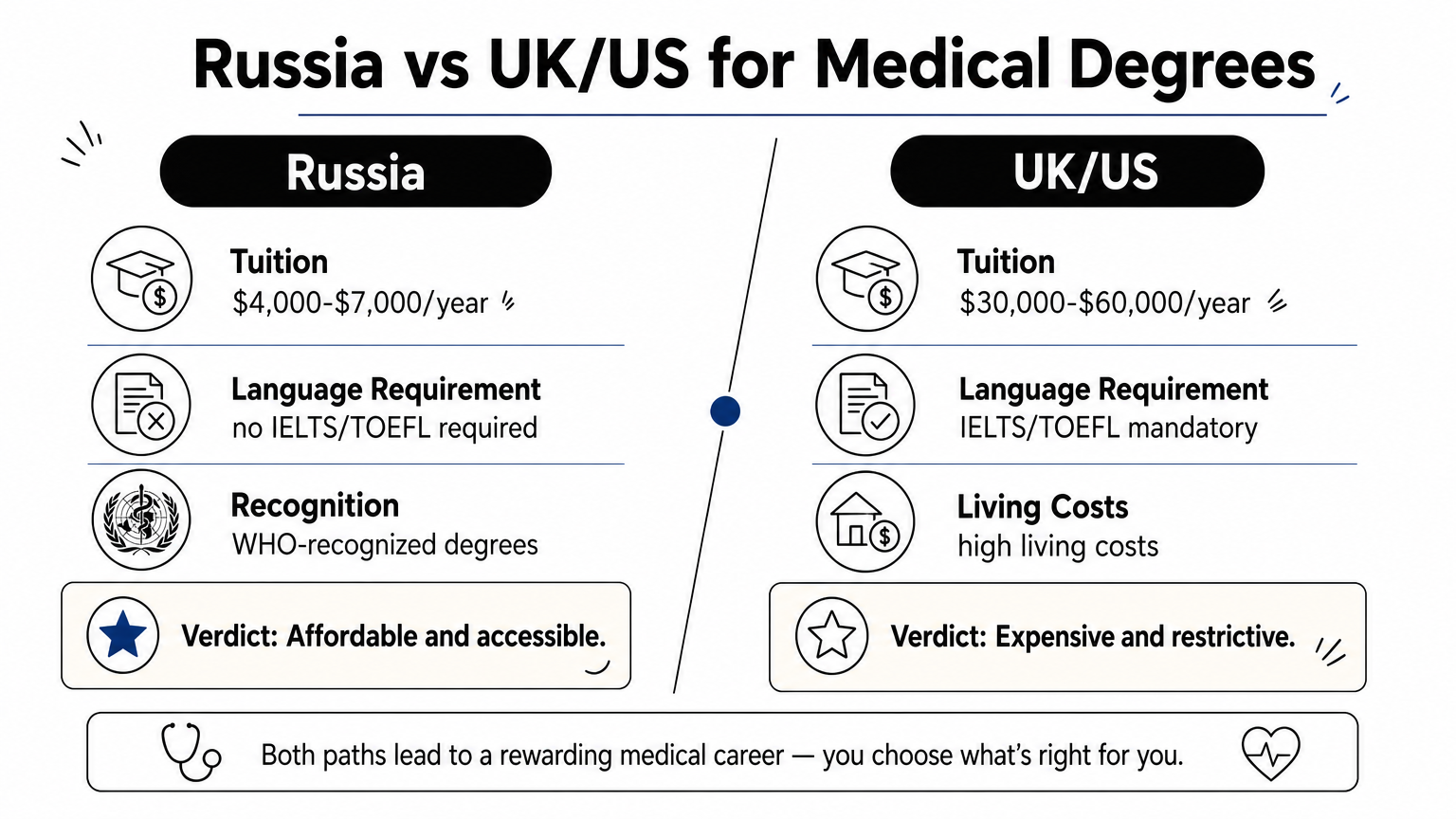
Look at the raw comparison for a full medical degree, tuition plus modest housing:
| Destination | Annual tuition (avg) | Annual living costs | English-taught | IELTS/TOEFL required |
|---|---|---|---|---|
| Russia | $4,000-$7,000 | $2,000-$3,500 | Yes | Usually no |
| United Kingdom | $30,000-$45,000 | $12,000-$18,000 | Yes | Yes |
| United States | $35,000-$60,000 | $15,000-$20,000 | Yes | Yes |
A six-year Russian medical degree can cost less overall than one year of tuition alone at a UK or US medical school.
Recognition matters as much as price
Price alone wouldn’t matter if the degree wasn’t usable back home. Russian medical universities on our partner list appear in the WHO World Directory of Medical Schools, and graduates from many programs qualify to sit licensing exams recognized by bodies like the NMC in India, a signal that carries weight for Gulf students planning to practice regionally or return to Kuwait’s licensing pathway. Kuwaiti students specifically benefit from this because it removes the guesswork around whether a foreign degree will actually count once you’re back home applying for a license.
No language test gatekeeping
Skipping the IELTS or TOEFL requirement isn’t a minor convenience, it removes months of prep and a real financial barrier for students who’d otherwise need to retake exams. Programs are taught fully in English from day one, so classroom instruction doesn’t change once you land in Russia.
Step 1. Choose the right university and program
Start by narrowing your list to universities that actually match your budget and career goal, not the ones with the flashiest brochure. Kuwaiti students applying for medicine should confirm WHO recognition before anything else, since that single detail determines whether your degree is usable back home.
Match the city to your budget
Russia has 24+ partner universities across seven cities, and tuition swings depending on where you land:
- Moscow or Saint Petersburg: higher tuition and living costs, strongest name recognition
- Kazan or Ufa: mid-range tuition, solid medical faculties, lower rent
- Novosibirsk or Sevastopol: the most budget-friendly option for tuition and housing combined
Choosing the right city can save a Kuwaiti family thousands of dollars a year without touching the quality of the degree.
Confirm the program details before you commit
Check the exact program length, language of instruction, and whether the university publishes its tuition fees openly. Some agencies quote a low number upfront and add hidden charges later, so ask for the full breakdown in writing. RUSBASE lists real, published costs for every partner university, which lets Kuwaiti families compare options honestly before reaching out for a free consultation.
Step 2. Prepare and submit your application documents
Once you’ve picked a university, the next task is gathering paperwork that satisfies both the Russian institution and the embassy in Kuwait City. Document preparation is where most delays happen, so get this stage right the first time instead of scrambling later.
Gather and translate the right documents
Russian universities need certified copies, and Kuwaiti-issued documents must be translated and often notarized before submission. Build your file around this checklist:
- High school certificate or bachelor’s degree (for postgraduate applicants)
- Passport copy valid for at least 18 months
- Passport-sized photos on a white background
- Medical fitness certificate, including an HIV test result
- Notarized Russian or English translation of academic transcripts
A single missing translation can push your admission decision back by weeks, so submit a complete file the first time.
Submit through your adviser for faster processing
Applications submitted through RUSBASE typically get an admission decision within seven working days, since our team checks every document before it reaches the university. Sending files directly without review often means back-and-forth corrections that cost you a month or more. Once the university approves you, expect the official invitation letter, the document Kuwaiti embassies require, within roughly 30 working days.
Step 3. Apply for your Russian student visa
With your invitation letter in hand, you take it straight to the Russian embassy in Kuwait City to begin the visa application process. This is the stage where Kuwaiti students often feel nervous, but the paperwork is straightforward once your invitation letter and university documents are already in order.

Gather your visa documents
Pack these items before booking your embassy appointment:
- Official invitation letter from your university
- Valid passport with at least two blank pages
- Completed visa application form
- Recent passport photo
- Proof of medical insurance covering your stay
- Visa fee payment receipt
A complete visa file at your first embassy visit saves Kuwaiti students weeks of back-and-forth.
Know the timeline
Expect visa processing to take about a week once your file is submitted correctly, though embassy backlogs can stretch this slightly during peak intake months in August and September. RUSBASE tracks your file status with the embassy directly, so you’re not left guessing whether your passport is sitting untouched or moving through approval. Students studying in Russia for Kuwait applicants should apply as soon as the invitation letter arrives rather than waiting, since university intake dates don’t shift for late paperwork.
Step 4. Plan your arrival and settle into student life
Book your flight once your visa is stamped, and confirm your arrival date with the university’s international office so someone meets you at the airport. Arrival support matters more than most students expect, since navigating a Russian airport with no Russian language skills on day one adds stress you don’t need.
What to pack and prepare before departure
Pack for the climate, not just the semester. Bring these essentials:
- Winter coat, boots, and thermal layers, even if you land in September
- Printed copies of your invitation letter, visa, and admission documents
- Enough cash in rubles for your first week, since card setup takes a few days
- Contact details for your university dormitory and local adviser
Landing with your paperwork in hand and a plan for your first week beats scrambling to figure things out after you arrive.
Settle into dormitory life and registration
Most universities house first-year international students in on-campus dormitories, and you’ll need to complete migration registration within days of arrival, a legal requirement for foreign students in Russia. RUSBASE arranges airport pickup and walks Kuwaiti students through registration and orientation, so your first week focuses on classes instead of paperwork.
Starting your journey to study in Russia
Getting from Kuwait City to a Russian medical campus isn’t complicated once you know the sequence: pick a WHO-recognized university that fits your budget, submit a complete document file, secure your visa, and pack smart for arrival. Studying medicine in Russia stops feeling like a gamble the moment you have real tuition numbers, a clear timeline, and someone on the ground who’s done this hundreds of times before.
Every step in this guide, from choosing between Kazan and Moscow to confirming your migration registration, gets easier with a local adviser managing the details instead of you chasing embassy emails alone. That’s the entire reason RUSBASE exists: one point of contact from your first message to your first day in a dorm room in Russia.
If you’re ready to see published tuition costs and talk through which university fits your situation, book your free consultation with RUSBASE and get a real answer today, not another brochure.
Questions About Your Own Case?
Requirements depend on your nationality and subject. Ask us directly — free.
Book a Free Consultation