
Cost of Living in Russia: A Complete Monthly Breakdown
September 24, 2026
Before you commit to studying or living in Russia, you want real numbers, not vague estimates. The russia cost of living question comes up constantly from students comparing Moscow rent to what they’d pay in London or Toronto, and the honest answer is that Russia costs a fraction of what Western countries charge for the same basics. This article breaks down exactly what you’ll spend each month, so you’re not guessing before you book a flight.
We’ll walk through monthly rent in student cities like Kazan, Ufa, and Saint Petersburg, grocery and dining costs, local transportation passes, phone plans, and the smaller expenses that add up, like winter clothing and health insurance. You’ll see a realistic total monthly budget rather than a marketing figure, because planning a move on incomplete numbers leads to stress later.
At RUSBASE, we work with students moving to Russia for medical and university degrees every day, so this breakdown reflects what our students actually pay, not published averages pulled from outdated sources. If you’re weighing Russia against the UK, US, or Canada for your studies, this is the real cost picture you need first.
Why the cost of living in Russia matters for students
Most students research tuition first and treat living costs as an afterthought, but that’s backwards. Cost of living in Russia often determines whether a family can sustain a six-year medical degree or a four-year bachelor’s program without running short in year three. A university’s published tuition fee tells you nothing about what you’ll spend on rent, groceries, transit, and winter gear over the length of your program, and that gap is where budgets fall apart.

Tuition Is Only Half the Picture
Parents and students frequently calculate only the annual tuition figure quoted by a university, then get surprised when monthly expenses add up to another $150 to $250 on top of that. A realistic budget has to account for far more than a room and a meal plan:
- Rent for a dorm or shared apartment
- Daily groceries and occasional dining out
- Local transit passes and taxi rides
- A local SIM card and data plan
- Winter clothing, since most Russian cities see sub-zero temperatures for four to five months
- Health insurance, which is mandatory for international students on a study visa
Skip any one of these and your monthly estimate is wrong before the semester even starts.
Family Budgeting Over Multiple Years
Sustaining a student in Russia for a full program means planning years ahead, not just for the first semester. A medical degree runs five to six years, so a $50 monthly miscalculation compounds into thousands of dollars of unplanned expense by graduation. Families who map out the full total monthly budget early, then multiply it across the program length, avoid the common trap of running comfortable in year one and scrambling for funds in year four.
| Program Length | Estimated Monthly Living Cost | Estimated Total Living Cost (excl. tuition) |
|---|---|---|
| 1 year | $220-$320 | $2,640-$3,840 |
| 4 years (bachelor’s) | $220-$320 | $10,560-$15,360 |
| 6 years (MBBS) | $220-$320 | $15,840-$23,040 |
A student who underestimates monthly living costs by even $50 loses over $3,000 across a six-year medical degree.
Avoiding Mid-Program Financial Stress
Nothing derails a student’s academic performance faster than a mid-semester money crisis. Overestimating your income and underestimating your expenses forces students into part-time work that Russian study visas restrict, or into borrowing from family under pressure. Realistic planning around the cost of living in Russia from day one means a student can focus on coursework and clinical rotations instead of calculating rent shortfalls every month.
Why Accurate Numbers Change Your Decision
Russia remains dramatically cheaper than studying in the UK, US, or Canada, but only if your budget reflects reality rather than a rough guess pulled from a forum post. That’s precisely why we publish real tuition and living figures for our partner universities rather than making students request a quote. When you know the actual numbers for a specific city and university before you apply, you can commit with confidence instead of hoping the math works out later. If you want a budget built around your actual subject and target city, book a free consultation with our advisers before you submit any application.
How to budget your monthly expenses in Russia
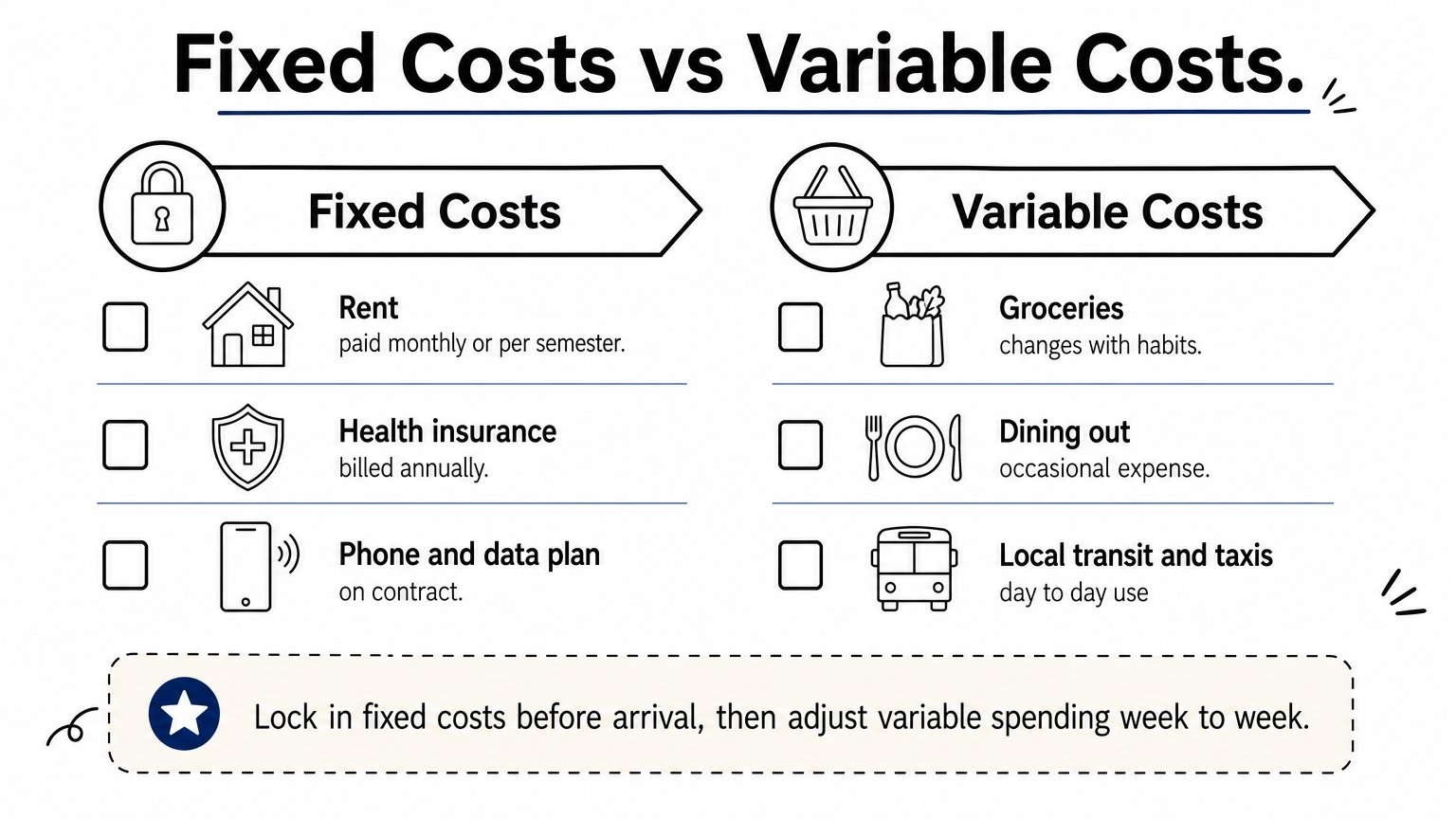
Budgeting in Russia works best when you split expenses into fixed costs you can lock in before you fly, and variable costs that shift depending on your habits. Cost of living in Russia looks intimidating on paper until you separate rent and tuition-linked fees, which stay flat all semester, from groceries and transit, which you control week to week. Students who build a budget this way rarely get blindsided, because they know exactly which line items can flex when money gets tight.
Lock In Your Fixed Costs First
Start with the expenses that don’t change regardless of how carefully you shop or cook. Rent, mandatory health insurance, and your SIM plan contract fall into this category, and you should confirm all three before you even book a flight.
- Dorm or shared apartment rent, paid monthly or per semester
- Mandatory student health insurance, usually billed annually
- Phone and data plan, often cheaper on a 3 or 6-month contract
- Local transit pass, if your city offers a discounted student rate
Fix your rent, insurance, and phone costs before arrival, and everything else becomes easy to adjust.
Build a Sample Monthly Budget
Once fixed costs are locked, layer in the variable spending that depends on your lifestyle. Groceries, dining out, and incidental transport swing the most, and this is where most students either save money or blow their budget.
| Category | Typical Monthly Cost (USD) |
|---|---|
| Rent (shared apartment/dorm) | $80-$150 |
| Groceries | $60-$90 |
| Local transit | $10-$20 |
| Phone/data plan | $5-$10 |
| Dining out (occasional) | $20-$40 |
| Miscellaneous/winter gear fund | $20-$30 |
Keep a Buffer for the Unexpected
No budget survives contact with reality without a cushion, so set aside 10 to 15 percent of your monthly total for surprises. Winter boots wear out, a document needs notarizing, or a friend’s birthday dinner runs longer than planned. Planning your total monthly budget with that buffer built in means a bad week doesn’t turn into a bad semester. If you’re unsure how your subject and target city affect these numbers, our advisers at RUSBASE can map out a realistic figure with you during a free consultation.
Cost of living in Russia by city
Where you study changes your monthly budget more than almost any other factor. A room in Moscow costs roughly double what the same room costs in Ufa, and that gap alone can swing your annual spending by over a thousand dollars. Students choosing between our 24+ partner universities across seven cities should treat location as a budget decision, not just an academic one.

Moscow and Saint Petersburg: the Premium Cities
Expect to pay the most in Russia’s two largest metros, where rent, dining, and transit all sit above the national average. A shared apartment in Moscow typically runs $180 to $280 a month, and Saint Petersburg sits close behind at $160 to $250. Groceries and transit stay only slightly higher than smaller cities, so the real cost difference comes almost entirely from rent.
Kazan, Ufa, and Novosibirsk: the Budget-Friendly Cities
These three cities consistently offer the lowest cost of living in Russia for international students, which is why they host a large share of our medical degree partners. Rent in Ufa and Kazan often falls between $70 and $130 a month for a shared room, and groceries cost noticeably less than in Moscow because of lower local demand and shorter supply chains.
Choosing Kazan or Ufa over Moscow can cut your monthly budget by $100 or more without sacrificing program quality.
Sevastopol and Other Regional Cities
Sevastopol and similar regional cities land somewhere between the two extremes, with living costs closer to Kazan than to Moscow, plus the added benefit of a milder climate that trims your winter clothing budget.
| City | Rent (shared) | Groceries | Local Transit | Estimated Total |
|---|---|---|---|---|
| Moscow | $180-$280 | $70-$100 | $15-$25 | $290-$400 |
| Saint Petersburg | $160-$250 | $65-$95 | $12-$20 | $260-$360 |
| Kazan | $80-$140 | $55-$80 | $8-$15 | $170-$250 |
| Ufa | $70-$130 | $50-$75 | $8-$15 | $150-$220 |
| Novosibirsk | $75-$135 | $55-$80 | $8-$15 | $160-$230 |
| Sevastopol | $90-$150 | $55-$80 | $8-$12 | $175-$240 |
Matching your city choice to your family’s actual budget matters more than picking the most well-known name on the list. If you want help weighing tuition against these regional living costs for your specific subject, our advisers can walk through the math with you during a free consultation before you commit to an application.
Russia vs the UK, US, and Canada: which is cheaper
Parents comparing Russia cost of living against the UK, US, or Canada usually expect a gap. What surprises most families is how wide that gap actually runs once you add tuition and living expenses together. A student in Manchester or Toronto can easily spend triple what a student in Kazan spends in a single month, and that difference compounds every year of a degree program.
Total Monthly Costs Side by Side
Breaking the numbers down city by city makes the comparison concrete instead of abstract. Below is a realistic monthly total, combining rent, food, transit, and basic utilities, for a student living modestly but comfortably in each country.
| Country | Typical City | Monthly Living Cost (USD) | Avg. Annual Tuition (Medicine) |
|---|---|---|---|
| Russia | Kazan / Ufa | $150-$250 | $4,000-$6,000 |
| UK | Manchester | $1,100-$1,500 | $30,000-$45,000 |
| USA | Ohio / Texas | $1,200-$1,800 | $40,000-$60,000 |
| Canada | Ontario | $1,000-$1,400 | $25,000-$35,000 |
A full year of living expenses in Russia often costs less than one month of rent in the UK or Canada.
Why the Gap Is So Large
Currency strength explains part of the difference, but so does a fundamentally lower cost structure for housing, groceries, and local transit across Russian cities. Landlords in Kazan or Novosibirsk charge a fraction of what a comparable unit costs in London or Vancouver, and public transit passes across Russian cities run $10 to $20 a month against $80 to $150 in a major Western city. Groceries follow the same pattern: a weekly shop that costs $60 in Russia often costs $150 or more in a US college town.
What This Means for Six-Year Programs
Stretch these monthly differences across a full medical degree, and the total savings run into six figures for many families. A UK or US student easily spends $180,000 to $300,000 across six years once tuition and living costs combine, while the same degree in Russia, tuition and living costs together, typically lands under $40,000. Recognition matters too, and our partner programs align with WHO World Directory and NMC standards, so the savings don’t come at the cost of a degree’s international standing. If you want the exact comparison for your target country and subject, book a free consultation with RUSBASE and we’ll run the numbers with you directly.
Putting the numbers into perspective
Every table in this article points to the same conclusion: the cost of living in Russia stays low enough that a full medical degree, tuition and monthly expenses combined, often costs less than a single year in the UK, US, or Canada. Kazan and Ufa give you the tightest budgets, Moscow and Saint Petersburg cost more but still undercut Western cities by a wide margin, and the fixed-versus-variable budgeting approach keeps you from getting blindsided mid-semester.
Numbers on a page only help if they match your actual situation, your subject, your target city, and your family’s real budget. That’s exactly what our advisers work through with students every week, using published pricing rather than vague estimates. If you’re ready to see what your specific program and city would actually cost, book a free consultation with RUSBASE and get real figures before you apply.
Questions About Your Own Case?
Requirements depend on your nationality and subject. Ask us directly — free.
Book a Free Consultation