
Moscow State University of Economics: History and Programs
September 28, 2026
If you searched for Moscow State University of Economics, you probably found conflicting names: MESI, Plekhanov, MSU’s Faculty of Economics. That confusion is common, and it matters if you’re trying to pick the right degree. This article sorts out which institution is which and shows you exactly where economics education fits inside Russia’s oldest and most respected university, so you stop guessing and start planning.
Moscow State University itself doesn’t run a separate "University of Economics." Instead, it houses an Economics Faculty founded in 1941, one of the oldest in the country, offering bachelor’s, master’s, and postgraduate programs in economic theory, finance, and management. Understanding this academic structure helps you compare it fairly against standalone economics universities like Plekhanov or the Higher School of Economics.
Below, you’ll get the faculty’s history, its current program lineup, admission requirements, and tuition ranges. If Russia’s economics landscape looks appealing but you’re unsure how to apply from abroad, RUSBASE can walk you through shortlisting, documents, and visas at no cost.
Why Moscow State University of Economics matters today
Graduates from MSU’s Economics Faculty hold degrees from the highest-ranked university in Russia, and that name carries weight far beyond Moscow. Employers across Eastern Europe, Central Asia, and increasingly India and Africa recognize an MSU diploma instantly, which is not always true for smaller specialized institutes. When people search for Moscow State University of Economics, they’re usually trying to confirm that this brand recognition applies to the specific program they’re considering, and for the Faculty of Economics, it does.
Reputation backed by global rankings
MSU consistently places among the top 100 universities worldwide in QS and Times Higher Education rankings, and its economics programs benefit directly from that institutional standing. A degree from a globally ranked university opens doors that a lesser-known regional college simply can’t, especially for students planning to work internationally or pursue further study abroad. You can check current standings yourself through the QS World University Rankings to see how MSU compares against other Russian and global institutions.
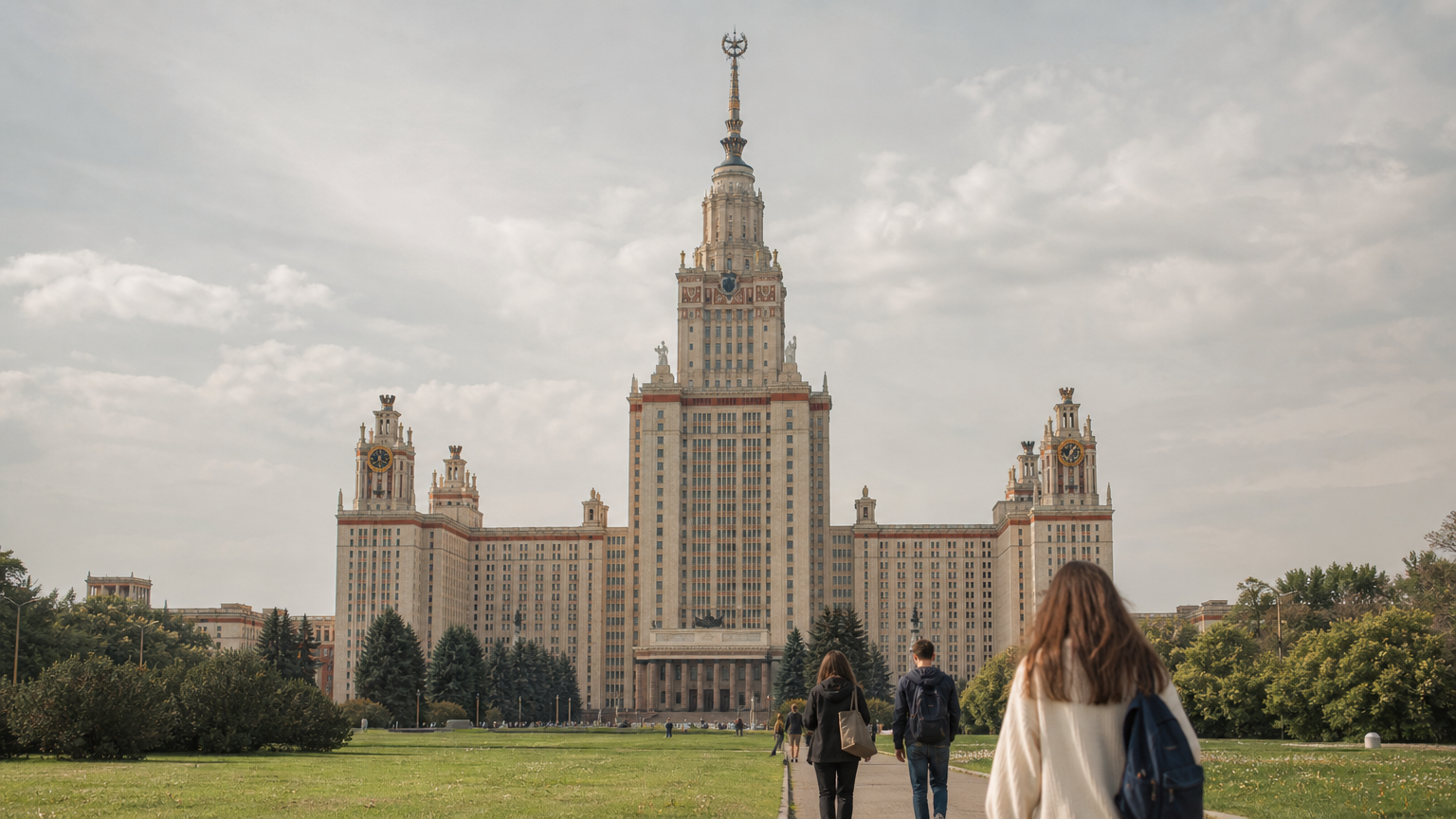
A diploma from MSU’s Economics Faculty travels well, because the university’s overall reputation does the heavy lifting for you.
Research output and faculty expertise
Beyond rankings, the faculty runs active research centers in econometrics, international trade, and public finance, staffed by economists who publish in respected journals and advise government bodies. Students get exposed to real policy debates, not just textbook theory, through seminars and guest lectures tied to that research work.
Relevance for international applicants
Finally, the faculty matters today because Russia has become a genuinely affordable alternative to Western economics programs, without sacrificing academic rigor. International students weighing tuition costs against long-term career value increasingly find that MSU’s economics track offers both, which is why so many searches for Russian universities eventually circle back to this specific faculty.
How to apply as an international student
Applying directly to MSU’s Economics Faculty means dealing with Russian-language paperwork, embassy coordination, and university deadlines on your own, which trips up most foreign applicants before they even submit documents. Working through an agency like RUSBASE removes that friction, since advisers based in Russia handle translation, submission, and visa steps for you at no extra cost.
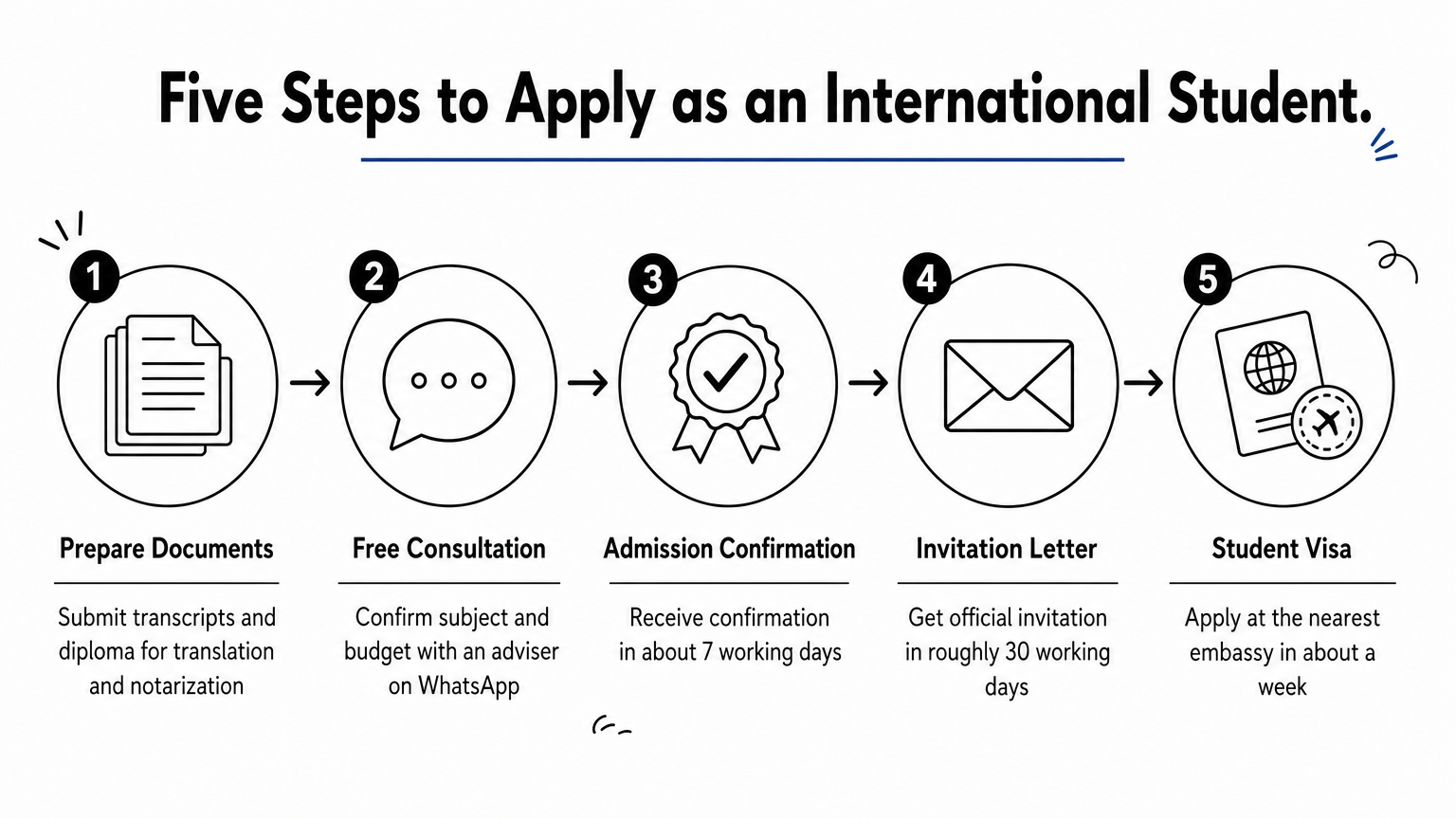
Getting your documents ready early matters more than any other step, because Russian universities process applications faster once your file is complete. Here’s the typical sequence:
- Submit your secondary school transcripts and diploma for translation and notarization
- Confirm your subject and budget with an adviser during a free WhatsApp consultation
- Receive admission confirmation, usually within about 7 working days
- Get your official invitation letter, which takes roughly 30 working days
- Apply for your student visa at the nearest embassy, a process that takes about a week
Notably, most moscow state university economics programs don’t require IELTS or TOEFL scores, which removes a major barrier for students who haven’t taken standardized English tests.
Skipping the English proficiency requirement alone can shave months off your application timeline.
Once your visa clears, RUSBASE arranges airport pickup so you land in Russia with someone already expecting you.
Programs and degrees offered
MSU’s Economics Faculty structures its offerings around three degree levels, each targeting a different career stage. Bachelor’s students spend four years building a foundation in microeconomics, macroeconomics, and statistics before choosing a specialization track in their third year. Master’s candidates then narrow into applied fields like international finance, econometrics, or public policy, usually finishing in two years. Postgraduate researchers pursue a Kandidat Nauk, Russia’s rough equivalent of a PhD, working alongside faculty on published research.
What each track focuses on
Understanding the tracks side by side makes comparison easier when you’re evaluating this against other moscow economics university options:
| Level | Duration | Typical Focus |
|---|---|---|
| Bachelor’s | 4 years | Core theory, statistics, chosen specialization |
| Master’s | 2 years | Applied finance, trade, policy analysis |
| Postgraduate | 3-4 years | Original research, dissertation defense |
Notably, several master’s tracks are taught partly or fully in English, which widens access for students who studied abroad and never touched Russian coursework.
The right track depends less on prestige and more on whether you’re aiming for industry work or academic research.
Once you know which level fits your goals, tuition and living costs become the next practical question.
Tuition and living costs to expect
MSU’s Economics Faculty charges more than most regional Russian universities, since its reputation lets it set premium rates. Bachelor’s tuition typically runs higher than at partner schools RUSBASE works with in Kazan or Ufa, so budget-conscious applicants should compare both options before committing. Moscow itself adds a second cost layer: rent, food, and transport in the capital exceed what you’d pay in smaller Russian cities.
Rough cost breakdown
Here’s what you can expect annually, in US dollars, for economics programs in Moscow versus other Russian cities:
| Item | Moscow (MSU-tier) | Regional Cities |
|---|---|---|
| Tuition (Bachelor’s) | $4,500-$7,000 | $2,500-$4,000 |
| Tuition (Master’s) | $5,000-$8,000 | $3,000-$4,500 |
| Housing (per year) | $2,000-$3,500 | $900-$1,800 |
| Food and living | $2,400-$3,600 | $1,200-$2,000 |
Moscow prestige comes with a Moscow price tag, and that’s fine only if your budget actually stretches that far.
Saint Petersburg, Kazan, and Novosibirsk offer economics-adjacent programs at a fraction of these figures. If lowering total cost matters more than the Moscow address, RUSBASE’s published pricing pages let you compare real numbers across 24 partner universities before you apply anywhere.
How MESI relates to Plekhanov and other Moscow schools
MESI, formally the Moscow State University of Economics, Statistics and Informatics, merged into the Plekhanov Russian University of Economics back in 2011, and that merger still confuses applicants who stumble on old university names. MESI no longer operates as an independent institution, so if you see it listed as a standalone option somewhere online, treat that as outdated information rather than a current application path.
Plekhanov itself is Russia’s oldest dedicated economics university, founded in 1907, and it now absorbed MESI’s programs, faculty, and campus infrastructure. Searching for a moscow economics university today usually means you’re comparing three distinct paths: MSU’s Economics Faculty, Plekhanov (which includes former MESI programs), and the Higher School of Economics, each with different tuition tiers and admission rules.
Treat MESI as a historical name folded into Plekhanov, not a separate school you can still apply to directly.
RUSBASE tracks these institutional changes closely because outdated program names lead students to submit applications through channels that no longer exist, wasting weeks they don’t have during an already tight admissions window.
Choosing where to study economics in Russia
Weighing MSU’s Economics Faculty against Plekhanov, HSE, or a regional partner school comes down to what you actually value: brand recognition, tuition cost, or program flexibility. Moscow State University of Economics confusion usually clears up once you accept that MSU never ran a standalone economics university, it’s a faculty inside a larger institution, while MESI folded into Plekhanov years ago. Nobody wins by applying through an outdated channel or overpaying for prestige they don’t need.
Your next move is comparison, not guesswork. Real tuition figures across cities matter more than rankings alone, since a cheaper regional program can deliver the same WHO-recognized credentials without Moscow’s price tag. Whichever path fits your budget and subject, get someone who knows the current program landscape to walk you through it before you submit anything.
If you want that clarity now, talk to a RUSBASE adviser for a free consultation and see real costs across 24 partner universities before you decide.
Questions About Your Own Case?
Requirements depend on your nationality and subject. Ask us directly, free of charge.
Book a Free Consultation