
Bashkir State Medical University: Fees, Admission, and MBBS Guide
September 27, 2026
If you’re comparing medical schools in Russia, Bashkir State Medical University probably showed up on your list, and for good reason. Based in Ufa, this university has trained doctors for decades and now attracts a growing number of international students, especially from Algeria and India, who want a recognized MBBS degree without the tuition prices charged in the UK or Canada. Before you commit, you need real numbers: what it actually costs per year, what the university expects from applicants, and whether the degree holds up once you’re back home applying for a license.
This guide answers exactly that. You’ll get a clear breakdown of tuition fees for the MBBS program, the admission requirements the university sets (including whether IELTS or TOEFL scores matter), and where the university stands in terms of recognition and rankings that affect your ability to practice medicine later.
We put this together because we work directly with students applying to universities like this one across Russia, and we’ve seen how much confusion comes from vague or outdated information online. What follows is a straightforward look at fees, admission steps, and what daily life and study actually involve at Bashkir State Medical University, so you can decide if it’s the right fit before you apply.
Why choose Bashkir State Medical University for MBBS
Ufa isn’t Moscow or Saint Petersburg, and that’s part of the appeal. Bashkir State Medical University was founded in 1932 and has since trained generations of Russian doctors, giving it a track record that newer private colleges simply don’t have. For international students, this history translates into established labs, teaching hospitals with real patient volume, and faculty who’ve been examining board students for decades, not just a few years. You’re not gambling on an unproven institution when you choose BSMU.
Global recognition is the part most students research last, and it should be first. The university’s MBBS program appears in the WHO World Directory of Medical Schools, and graduates from Indian and Algerian backgrounds have successfully used their degrees to sit for licensing exams back home, including India’s NMC screening test. This matters because a degree that looks good on paper but isn’t recognized where you plan to practice is a wasted investment.
A medical degree only pays off if you can actually use it to practice back home.
Cost is where BSMU pulls ahead of Western options by a wide margin. A six-year MBBS program in Ufa runs a fraction of what comparable degrees cost in the UK or Canada, and living expenses in Ufa are lower than in Moscow or Saint Petersburg, since it’s a regional capital rather than a major metro hub.
| Destination | Approx. total MBBS cost (6 years) | Language test required |
|---|---|---|
| Bashkir State Medical University (Russia) | $25,000–$35,000 | Usually not required |
| United Kingdom | $180,000+ | IELTS required |
| Canada | $150,000+ | IELTS/TOEFL required |
| India (private colleges) | $60,000–$100,000 | Not required |
English-medium instruction removes another common barrier. Most MBBS programs at BSMU don’t require IELTS or TOEFL scores for admission, which matters if you’re a strong student academically but haven’t had access to expensive test prep. Instructors teach the core curriculum in English, with Russian language classes added alongside so you can communicate with patients during clinical rotations later in the program.
Students also point to Ufa’s safety and manageable size as reasons they picked BSMU over bigger cities. Fewer language barriers with locals, lower crime rates than you’d find in a major capital, and a tighter-knit international student community all make the adjustment period shorter. If you’re weighing Bashkir State Medical University against other Russian options, these factors, cost, recognition, and day-to-day livability, are what actually separate a good choice from a regretted one.
How to apply to Bashkir State Medical University
Applying to Bashkir State Medical University is simpler than most students expect, mostly because the university doesn’t demand entrance exams or English proficiency scores that eat up months of prep time. Your academic transcripts and a clean application package matter far more here than a standardized test score. That said, the paperwork still needs to be exact, and small errors are the main reason applications get delayed.
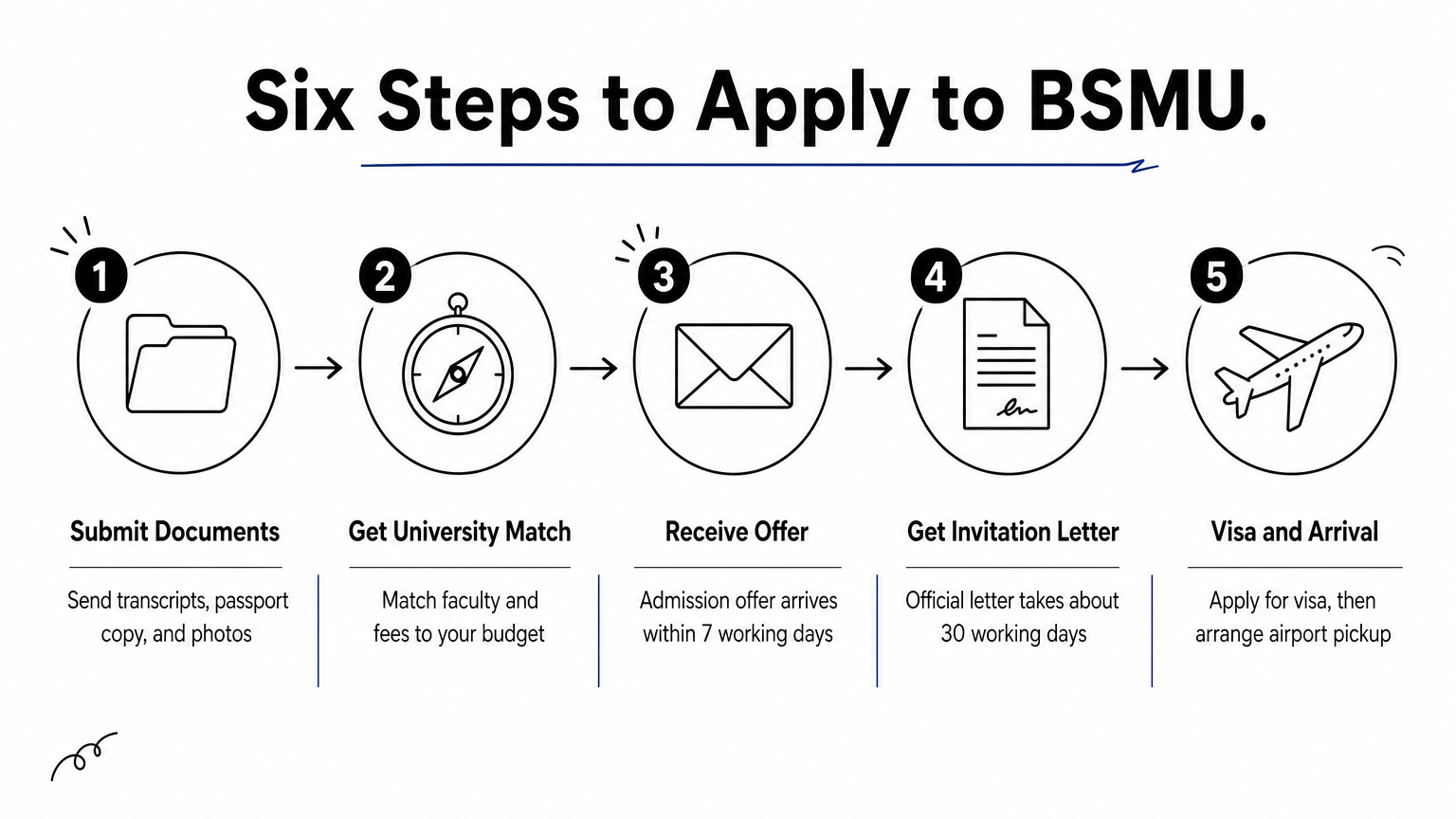
Documents and steps you’ll need
Getting your file together early saves you weeks later. Here’s what the process generally looks like when you work through a consultancy like RUSBASE instead of applying solo:
- Submit your academic documents: high school transcripts, passport copy, and passport-sized photos.
- Get a university selection based on your budget, since fees vary slightly by faculty and intake year.
- Receive your admission offer, typically within 7 working days once your documents check out.
- Wait for the official invitation letter, which takes around 30 working days and is required for your student visa.
- Apply for your visa at the Russian embassy, a step that usually takes about a week once the invitation arrives.
- Arrange arrival support, including airport pickup in Ufa, so you’re not navigating a new country alone on day one.
The fastest applications are the cleanest ones, not the ones rushed through without checking every document twice.
Don’t underestimate document translation. Any certificate not already in Russian or English typically needs certified translation before submission, and universities won’t process incomplete files. This is where a lot of independent applicants lose time, chasing notarized copies after the fact instead of before.
Finally, confirm your medical university admission timeline against Russia’s academic calendar. Intakes generally start in September, with a smaller February window at some faculties. Missing the cutoff by even a week can push your start date back a full semester, so treat the invitation letter step as the one to plan around most carefully.
Tuition fees and living costs at BSMU
Money questions come up first for a reason, and BSMU keeps its numbers straightforward compared to agencies that make you inquire before quoting a figure. Tuition fees for the MBBS program at Bashkir State Medical University typically run between $4,000 and $5,500 per year, depending on the intake year and any currency adjustments the university applies annually. Hostel accommodation adds a modest amount on top, usually a few hundred dollars per year, far less than renting privately in Moscow or Saint Petersburg.
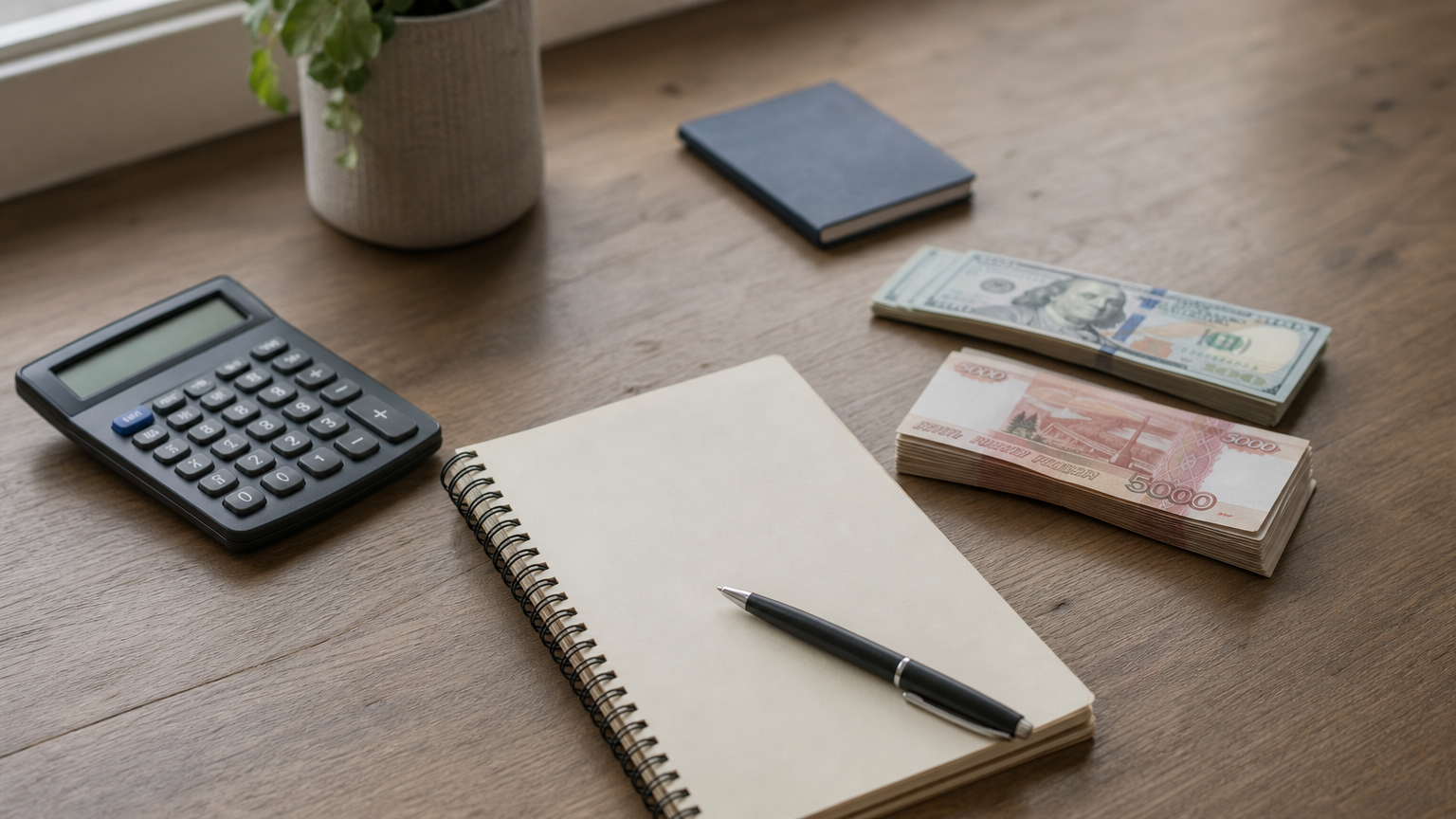
Budgeting for daily life matters just as much as the tuition sticker price. Food, transport, and basic supplies in Ufa cost noticeably less than in Russia’s bigger cities, which is part of why students on tighter budgets often choose it over capital-city universities.
| Expense category | Approx. cost per year (USD) |
|---|---|
| Tuition (MBBS) | $4,000–$5,500 |
| Hostel accommodation | $300–$600 |
| Food and daily living | $1,200–$1,800 |
| Books and supplies | $150–$250 |
Government scholarships occasionally reduce these figures further for eligible applicants, though most international students pay the published rate directly. Halfway through the program, costs generally stay flat rather than climbing, since BSMU doesn’t tack on surprise fees for clinical years the way some private colleges do elsewhere.
Published, upfront pricing tells you more about an agency’s honesty than any glossy brochure ever will.
It’s worth comparing this full package, tuition plus living costs, against total costs back home or in Western countries before deciding. Working with a consultancy that publishes real numbers instead of vague estimates saves you from budget surprises halfway through your first year, when switching universities becomes far harder than it would have been at the application stage.
Faculties, syllabus, and global recognition
Bashkir State Medical University runs several faculties beyond the General Medicine program most international students enroll in, including Pediatrics, Dentistry, and Pharmacy, though the MBBS-equivalent General Medicine track is what draws the bulk of applicants from Algeria and India. Each faculty follows a six-year structure split into pre-clinical years focused on anatomy, physiology, and biochemistry, followed by clinical years spent in teaching hospitals attached to the university. Coursework in the early years happens mostly in lecture halls and labs, while years four through six shift toward hands-on rotations where you examine real patients under supervision.
What the syllabus actually covers
Government education standards in Russia set the baseline curriculum, so BSMU’s syllabus mirrors what you’d find at other recognized medical universities in the country, just taught in English for international cohorts. Subjects progress from foundational sciences toward specialty rotations in internal medicine, surgery, obstetrics, pediatrics, and psychiatry. Russian language classes run alongside the medical curriculum starting in year one, since you’ll need conversational Russian to talk with patients once clinical rotations begin, even though your coursework and exams stay in English.
Recognition that actually matters
Here’s the detail that separates a worthwhile degree from a wasted six years: BSMU appears in the WHO World Directory of Medical Schools, and its graduates are eligible to sit India’s NMC screening test after returning home. Algerian graduates similarly go through their national equivalency process, and BSMU’s standing as a long-established public university, not a private institution with a shaky accreditation history, works in your favor during that review.
A degree only counts if the licensing board back home recognizes where you earned it.
This combination, a standardized government curriculum plus documented international recognition, is what makes BSMU a safer bet than newer or unaccredited alternatives that promise faster timelines but can’t show the same paper trail.
Campus life and hostel facilities at BSMU
Living at Bashkir State Medical University feels less overwhelming than dropping into a massive capital-city campus, and that’s exactly why many international students settle in faster here than they expected. Ufa’s compact size means your hostel, lecture halls, and hospital placements sit within a short walk or a quick bus ride of each other, so you’re not losing hours commuting across a sprawling city just to attend anatomy lab.
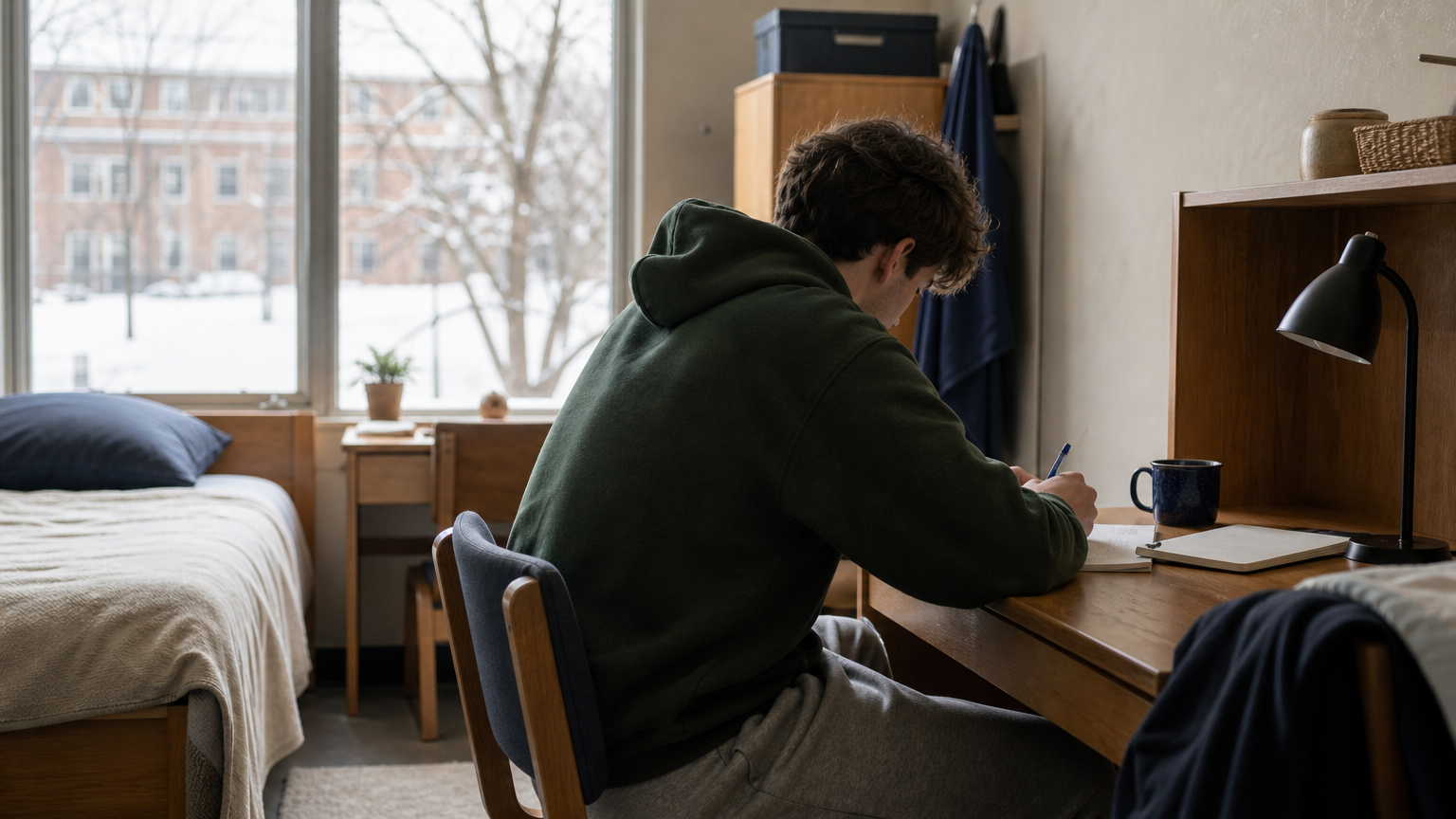
Hostel rooms and daily routine
Rooms are typically shared between two or three students, furnished with beds, desks, and storage, and every floor has a shared kitchen and bathroom facilities maintained by university staff. Security guards staff the entrance around the clock, which matters to parents back home as much as it does to the students living there, and Wi-Fi access covers most buildings so you can keep in touch with family without hunting for a signal. Heating during Ufa’s cold winters is reliable, something students moving from warmer climates in Algeria or India notice within the first month.
Food and student community
Canteens on campus serve affordable meals daily, and larger student communities have pushed several nearby shops and restaurants to stock halal food options, which matters if that’s a requirement for your diet. Cultural associations organized by students themselves, not the administration, run regular events that help newcomers meet others from their home country during the first difficult weeks of adjustment.
A campus where you can find your own community faster is a campus where you actually finish the degree.
Gathered together, the hostel setup, food access, and tight-knit international mix explain why students who choose BSMU rarely describe culture shock as a reason for regret later in the program.
Planning your path to BSMU
Getting into Bashkir State Medical University comes down to three things: clean paperwork, realistic budgeting, and a clear picture of how the degree transfers back home. You now know the tuition range, the admission steps, and what recognition actually protects your future license. None of that matters if you delay the invitation letter step or skip document translation until the last minute, so start early rather than scrambling before the September intake closes.
Compare this against every other option on your shortlist, but don’t let vague pricing from other agencies slow you down while BSMU’s numbers stay published and clear. If you’re ready to move from research to an actual application, talk to RUSBASE for a free consultation and get a straight answer on fees, timelines, and whether BSMU fits your budget and goals before you commit to anything.
Questions About Your Own Case?
Requirements depend on your nationality and subject. Ask us directly, free of charge.
Book a Free Consultation