
Study in Russia Without IELTS: How Admission Actually Works
July 23, 2026
For most study destinations, the English test comes before everything else: months of preparation, exam fees, and the risk of missing an intake over half a band score. Russia works differently, and it is the single most searched fact about studying here, so let us state it plainly and then explain the mechanics.
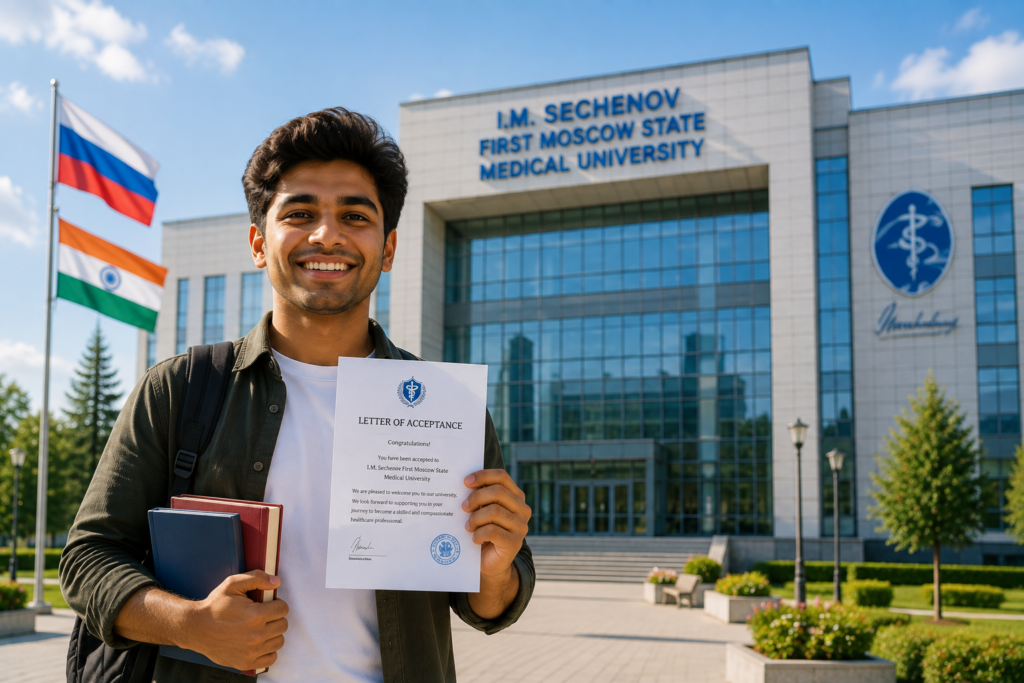
Do Russian universities require IELTS or TOEFL?
The great majority do not, including English-taught medical programmes. Russian universities assess your school certificate and transcript rather than a standardised English score. For English-medium programmes, some universities run a short online interview or an internal entrance test to confirm you can follow lectures; these are administered by the university itself, cost nothing extra, and are far less demanding than IELTS.
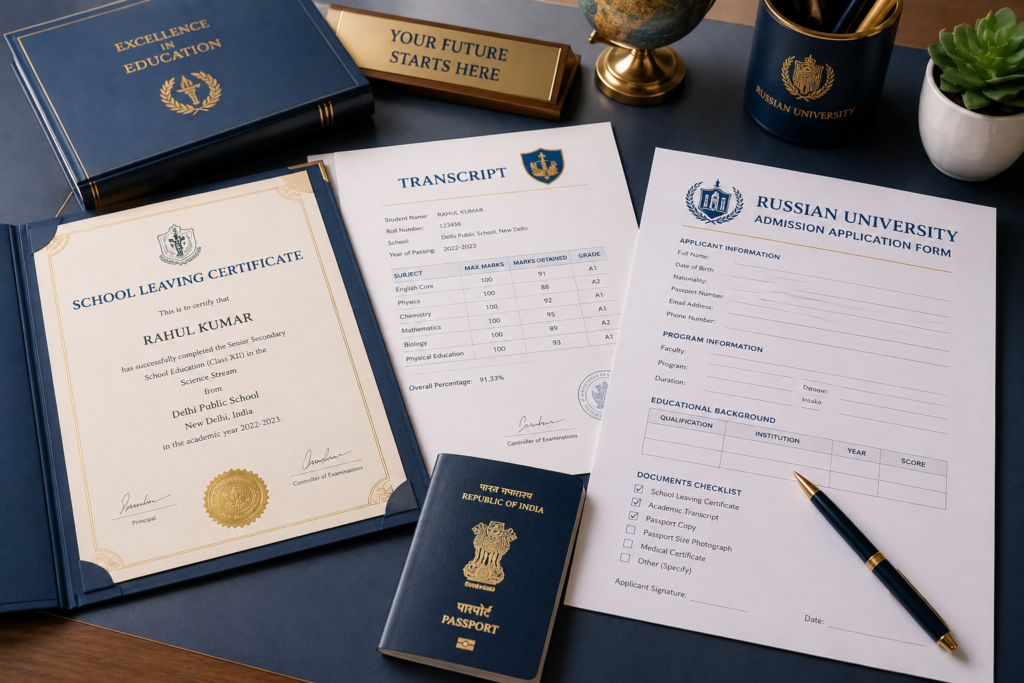
Why is Russia different?
Admission requirements are set by each university under federal standards, and the system was never built around Anglophone testing agencies. A student applying with a good school certificate in biology and chemistry is exactly what a medical faculty wants to see. This is also why there is no strict minimum grade at most universities: your profile is assessed as a whole.
What do you need instead?
A passport valid for the length of your studies, your high school certificate and transcript, passport-size photos, and standard medical certificates. Every academic document must be translated into Russian and notarised. RUSBASE handles certified translation and notarisation in-house, which is one of the most common points where self-managed applications fail.
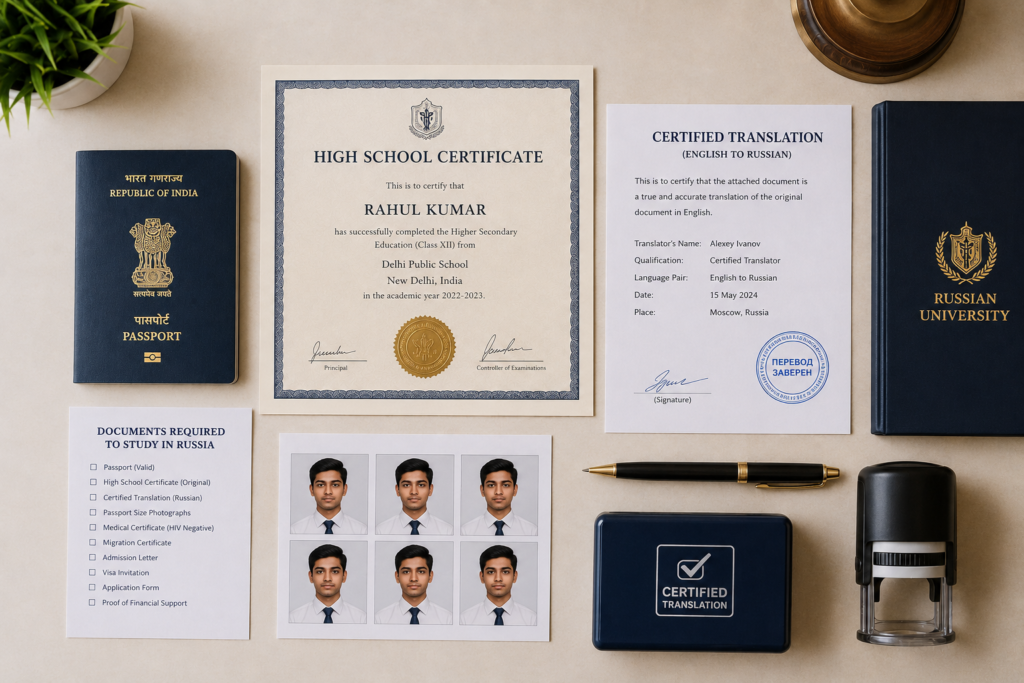
Which students benefit most?
Students who are academically strong but have never sat an English exam, students on a deadline who cannot wait for the next test date, and students whose budget is better spent on tuition than on test fees and preparation courses. If you studied your school subjects in English, an English-medium degree in Russia is realistic without any external certificate.
Frequently Asked Questions
Is there any English test at all?
Some universities hold a short internal interview or placement test for English-medium programmes. It is run by the university, free, and much lighter than IELTS.
Does no IELTS mean lower quality?
No. The same universities appear in the WHO World Directory and international rankings. The admission system simply assesses school results instead of test-agency scores.
Can I study in English from the first year?
Yes, English-taught programmes in medicine, engineering, IT and business admit students directly, no preparatory year required.
Book a free consultation and we will confirm the exact requirements for your chosen university; typically the acceptance letter follows within 7 working days.
Frequently Asked Questions
Can I study in Russia without IELTS?
Yes. The great majority of Russian universities admit international students without IELTS or TOEFL, including English-taught medical programmes. Instead of an English test, universities assess your school certificate and transcript. Some English-medium courses hold a short, free internal interview to confirm you can follow lectures, far lighter than IELTS.
Do Russian universities require IELTS or TOEFL?
Most do not. Admission requirements are set by each university under federal standards, and the system was never built around English testing agencies. A strong school certificate in your subjects; biology and chemistry for medicine, is what faculties want to see, not a band score.
Is there any English test to study in Russia?
Some universities hold a short online interview or internal placement test for English-taught programmes, purely to confirm you can follow lectures. It is administered by the university itself, costs nothing extra, and is far less demanding than IELTS. Many programmes have no English test at all.
Does studying without IELTS mean lower quality education?
No. The same universities that admit without IELTS appear in the WHO World Directory of Medical Schools and international rankings. The admission system simply assesses school results instead of test-agency scores; the degree, teaching, and recognition are exactly the same.
What do I need to study in Russia instead of IELTS?
A passport valid for your full study period, your high school certificate and transcript, passport-size photos, and standard medical certificates. Every academic document must be translated into Russian and notarised, a common point where self-managed applications fail, which is why RUSBASE handles translation in-house.
Can I study medicine in Russia in English without IELTS?
Yes. Several partner universities run the complete MBBS programme in English and admit students without IELTS, assessing your school results instead. You can begin clinical studies directly, with no preparatory year required for English-medium tracks. A short internal interview may confirm your English level.
Questions About Your Own Case?
Requirements depend on your nationality and subject. Ask us directly — free.
Book a Free Consultation